
The best HVAC performance pay plan is a balanced scorecard that ties at least 40% of incentive value to service-quality metrics, with the rest tied to revenue or productivity a technician actually controls. Run it as a 30 to 90 day pilot before rolling it out company-wide, and check your overtime math before the first check goes out. If you want help building the scorecard or piloting it safely, a short audit with a trades-focused consultant will save you months of trial and error.
TL;DR:
- At least 40% of incentive value should be based on service-quality metrics to ensure quality standards are maintained alongside sales growth.
- A balanced scorecard should include metrics such as first-time fix rate, callback rate, customer satisfaction, documentation accuracy, and technician-sourced revenue.
- Different roles require tailored pay structures, with task-based pay suitable for installs and flat-rate jobs, revenue-share for sales-driven technicians, and hybrid plans for consistent frameworks.
- Piloting the pay plan over 30 to 90 days with clear baseline data, technician buy-in, and compliance checks helps prevent morale issues and ensures accurate implementation.
- Variable pay must be carefully designed to align with influence over sales and standardized tasks, with compliance considerations including overtime calculations and bonus inclusions.
Table of Contents
- Why a balanced approach beats pure hourly or pure revenue-share
- What metrics to track and how much weight they deserve
- Plan designs you can adapt for your shop
- How to pilot the plan without blowing up morale
- Pay mechanics and compliance you cannot skip
- Measuring results and knowing when to adjust
- Why this comes from hands-on trade operations work
- Pay plans should extend your systems, not replace them
- How Rebuilding the Trades helps you build a plan that holds up
- Where these numbers and guidelines come from
- Sources
- FAQ
Why a balanced approach beats pure hourly or pure revenue-share
Pure hourly pay gives technicians no reason to sell maintenance plans, upsell a failing capacitor, or hustle on a slow Tuesday. Pure revenue-share does the opposite: it pays for speed and sales, but it quietly punishes the tech who takes 20 extra minutes to document a job correctly or the one who refuses to recommend a repair the customer does not need. Industry analysis of performance pay in HVAC found that revenue-only incentive structures often cause callback prevention and routine maintenance work to get neglected because nobody gets paid for it.
A technician in the field is doing two jobs at once: delivering the service and influencing whether the customer buys more of it. A pay plan that only rewards one side of that job will eventually erode the other.
- Hourly pay alone rewards time on the clock, not results.
- Revenue-only pay can quietly sacrifice quality and safety shortcuts for speed.
- Balanced plans push technicians toward more sales and fewer comebacks at the same time.
What metrics to track and how much weight they deserve
A workable scorecard does not need a dozen metrics. It needs a handful that a technician can see, understand, and actually move.
- First-time fix rate, the share of calls resolved without a return visit.
- Callback rate, which flags jobs that had to be redone or revisited.
- Customer satisfaction score, usually collected through a post-visit survey or review.
- Documentation completeness, covering photos, notes, and parts logged correctly.
- Technician-sourced revenue or attachment rate, meaning memberships, add-ons, and upsells the tech generated.
At least 40% of total incentive value should sit on service-quality metrics like the first four above, according to technician incentive research from Wards, so growth incentives never outweigh the standards that keep customers coming back.
Field service compensation research from Simon-Kucher recommends building each role’s plan around just two to three metrics the technician can directly influence. Stack too many measures onto one scorecard and technicians stop trusting the math, which defeats the purpose of the plan. Our guide to HVAC KPIs covers how to track these numbers without adding a reporting burden your dispatch team cannot sustain.
Plan designs you can adapt for your shop
Different roles call for different pay logic, and forcing one template onto every technician usually backfires.
Task-based or flat-rate pay works well for installs and predictable repair jobs. Each task carries a set price, so the tech knows exactly what a job pays before starting it. Our flat-rate pricing guide walks through how to build those unit prices without shortchanging complex jobs.
Revenue-share or commission structures fit technicians who close their own work, typically comfort advisors or senior techs selling replacements. The guardrail here matters more than the split itself: crediting rules need to be airtight, and quality weighting has to survive even when a big-ticket sale is on the table.
Scorecard or profit-linked pay breaks the company’s profit goal into individual targets, so a technician’s daily or weekly earnings reflect how their work moved the needle on company performance, not just their own ticket total.
- Task-based pay suits installs, maintenance visits, and other standardized jobs.
- Revenue-share suits technicians with real influence over what gets sold.
- Scorecard hybrids suit shops that want one consistent framework across roles.
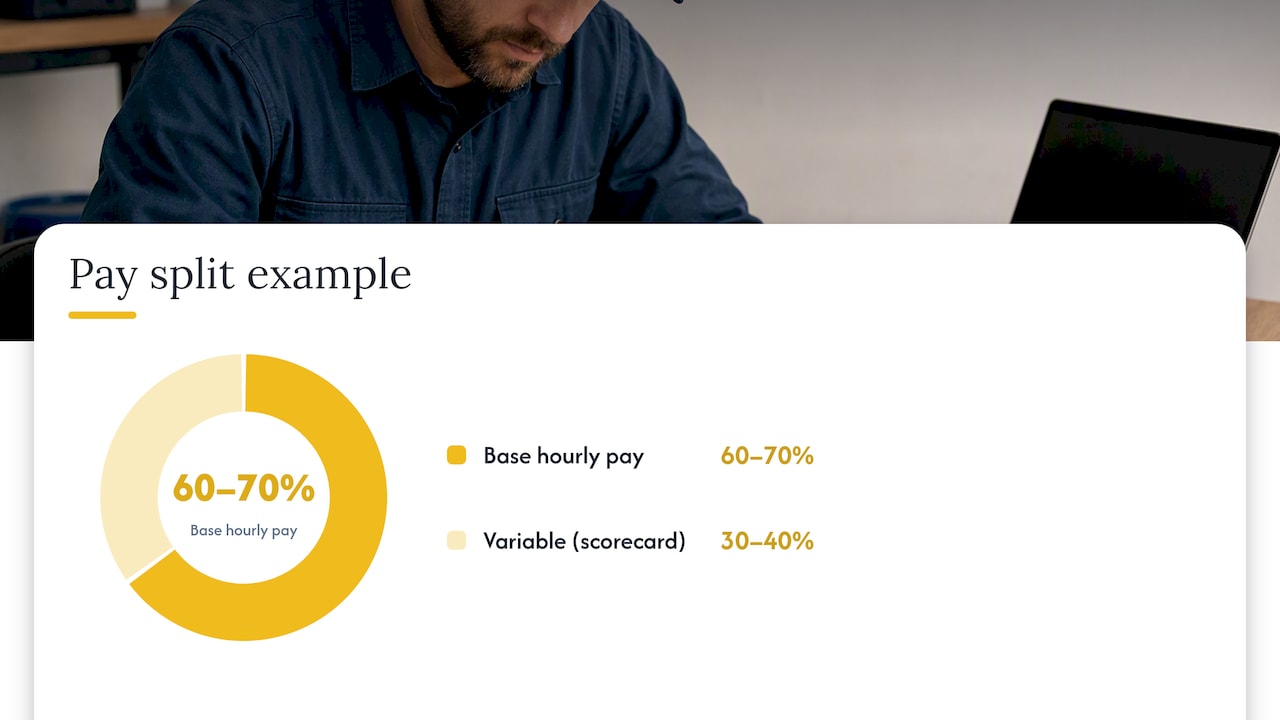
A hybrid example: base hourly pay covers 60 to 70% of total compensation, with the remaining 30 to 40% distributed across the scorecard’s quality and revenue metrics.
Pro Tip: Start every technician’s scorecard summary with their quality score, not their revenue number, so the plan visibly rewards the work you actually want more of.
How to pilot the plan without blowing up morale
Rolling out a new pay structure cold, across the whole shop, is how you lose your best technicians in week one. A pilot protects you from that.
- Pick a pilot cohort and window, typically 30 to 90 days, and record baseline numbers before you start.
- Run pay-preview weeks where technicians see what they would have earned under the new plan without any money changing hands yet, a tactic trade operators have used to get voluntary buy-in.
- Assign clear ownership for score calculations, dispute resolution, and the data sources feeding the scorecard.
- Train managers and technicians together so everyone understands the formula before the first real payout lands.
Pay-preview pilots consistently convince skeptical technicians to opt in once they see the projected numbers on their own jobs rather than a hypothetical example.
Pro Tip: Give technicians a one-page example showing a real job scored under the new plan, math included, before you ask anyone to sign on.
Pay mechanics and compliance you cannot skip
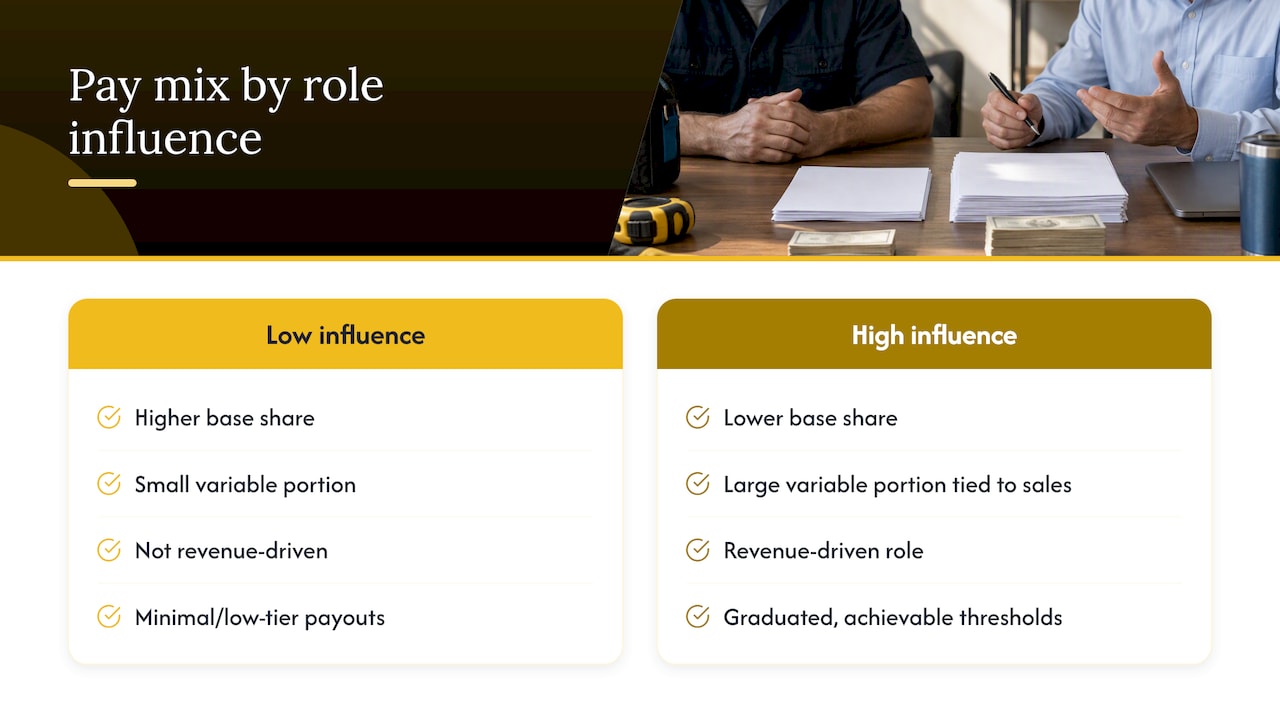
Base pay should scale with how much influence a role has over sales versus how much it depends on standardized tasks, with variable pay filling the gap for roles that can move revenue. Payout curves need achievable thresholds: a scorecard that only pays out at the very top discourages everyone except your best performer.
The compliance piece is not optional. Under Department of Labor guidance, non-discretionary bonuses generally must be folded into the regular rate for overtime calculations, and formulaic incentive payouts almost always count as non-discretionary. Getting this wrong is a common and expensive mistake, so loop in payroll counsel before the plan goes live.
Measuring results and knowing when to adjust
A pilot only tells you something if you are watching the right numbers on a set schedule.
- Track company profit impact, average ticket size, callback rate, and technician retention.
- Check results at 30, 90, and 180 days, since early swings often smooth out by the second window.
- Adjust weightings or payout thresholds based on what the data shows, not on anecdote from one loud technician.
Tracking repair costs across every job helps you see whether the plan is actually improving company profit per ticket, which is the number that ultimately tells you if the pay plan earned its keep.
Why this comes from hands-on trade operations work
Rebuilding the Trades works exclusively with trade businesses, including HVAC, plumbing, and electrical companies, building the operational systems that pay plans depend on: dispatch structure, financial visibility, and KPI reporting. Client engagements have reported improved operational visibility after implementing these systems. Author Dan writes on HVAC operations and KPI design for owners building or auditing incentive structures, drawing on that same operational framework rather than a single technician’s account.
Pay plans should extend your systems, not replace them
Compensation should reinforce the processes you already run, not create a shortcut around them. Keep the plan simple enough to audit on a napkin. Complexity kills trust faster than a bad payout ever will.
— Dan
How Rebuilding the Trades helps you build a plan that holds up
Designing a scorecard is one thing. Piloting it, training managers to run it, and fixing the compliance gaps before payroll finds them is another. Hands-on consulting can assist HVAC owners on plan design, pilot governance, and KPI systems that make a scorecard trustworthy, alongside leadership training for the managers who will run it day to day.

If you are ready to build a performance pay plan that actually holds up under payroll and morale pressure, visit the Rebuild services page to start the conversation.
Where these numbers and guidelines come from
Pay benchmarks come from the BLS Occupational Outlook Handbook. Plan design guidance comes from Wards and Simon-Kucher. Overtime compliance guidance comes from Troutman Pepper.
Sources
- How to motivate service technicians — wardsauto
- Designing field service compensation that drives value without breaking trust — Simon-Kucher
- Heating, Air Conditioning, and Refrigeration Mechanics and Installers — U.S. Bureau of Labor Statistics OOH
- DOL opinion letter compliance roadmap for including bonuses in overtime calculations — Troutman Pepper
- Examination of performance pay for HVAC technicians — Contracting Business
FAQ
What type of HVAC work pays the most?
Comfort advisors and senior service technicians who carry commission or revenue-share components typically out-earn purely hourly installers, since their pay includes what they sell on top of base wages. The BLS reports that the top 10% of HVAC mechanics and installers earned more than $91,020 annually as of May 2024.
What are some examples of pay for performance incentives?
Common examples include flat-rate task pay for installs, commission on technician-sourced sales like memberships or upgrades, and scorecard bonuses tied to first-time fix rate and customer satisfaction. Most trade-focused plans combine two or three of these rather than relying on just one.
Do HVAC technicians make six figures?
Some do, particularly senior technicians or comfort advisors in high-cost markets with strong commission structures, but the median annual wage for HVAC mechanics and installers was $59,810 as of May 2024. Six-figure earnings generally require a mix of experience, market, and a pay structure that rewards sales performance.
What pays better, HVAC or electrician work?
Pay in both trades varies widely by experience, region, and whether the role includes commission or incentive pay, so neither trade categorically out-earns the other. The BLS Occupational Outlook Handbook is the most reliable source for comparing median wages between the two.
0 Comments